


The early 20th century saw the birth of Modernist architecture. It brought with it a central architectural movement that in turn birthed off-shoots of its own. A figure often seen as the defining face of this movement is Le Corbusier, whose 1923 treatise Toward an Architecture was influential to his Modernist contemporaries – a manifesto including the phrase “a house is a machine for living in” where good architecture would have to be intrinsically linked to function and the demands of industry.
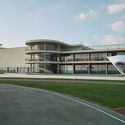
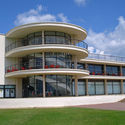
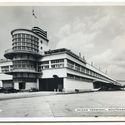
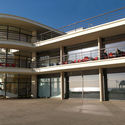

In searching for design precedents where function and form have a harmonious relationship, transportation became, for Modernist groups of architects, a key source of inspiration. Cars for the likes of Le Corbusier became an obsession, with him seeing the automobile as an indisputable symbol of modernity. Another form of transportation, however, had an arguably even bigger impact. The ocean liner – long-haul passenger ships – becoming icons of exemplary design for a so-called “architecture of the new age”


